A slim cart earns its place when it fits a real gap, rolls out without catching and holds items that are otherwise hard to reach. Width matters, but stability, wheel direction and shelf access matter just as much.
| Cart type | Main advantage | Best contents | Main trade-off |
|---|---|---|---|
| SPACEKEEPER-style slim cart | Fits very narrow gaps | Packets, bottles, wraps | Lower stability |
| IKEA RÅSKOG utility cart | Strong open access | Produce, tools, pantry jars | Not ultra-slim |
| Wood-top rolling island | Adds prep surface | Cookware and serving items | Needs more aisle room |
| Yamazaki-style tower cart | Clean narrow profile | Bottles and compact pantry goods | Premium price |
How we chose
We separated carts by the job they perform. We considered usable width, shelf access, wheel placement, side rails, cleanability and whether a cart remains useful when it cannot stay permanently beside the refrigerator.
SPACEKEEPER Slim Rolling Storage Cart
This common narrow-cart format uses several shallow tiers and a long pull handle. It works for lightweight pantry goods in an otherwise wasted gap beside an appliance or cabinet.
Trade-offs: Tall, narrow plastic carts can flex or tip if overloaded. Keep heavier items low and confirm that the wheels roll in the direction you need.
IKEA RÅSKOG Utility Cart
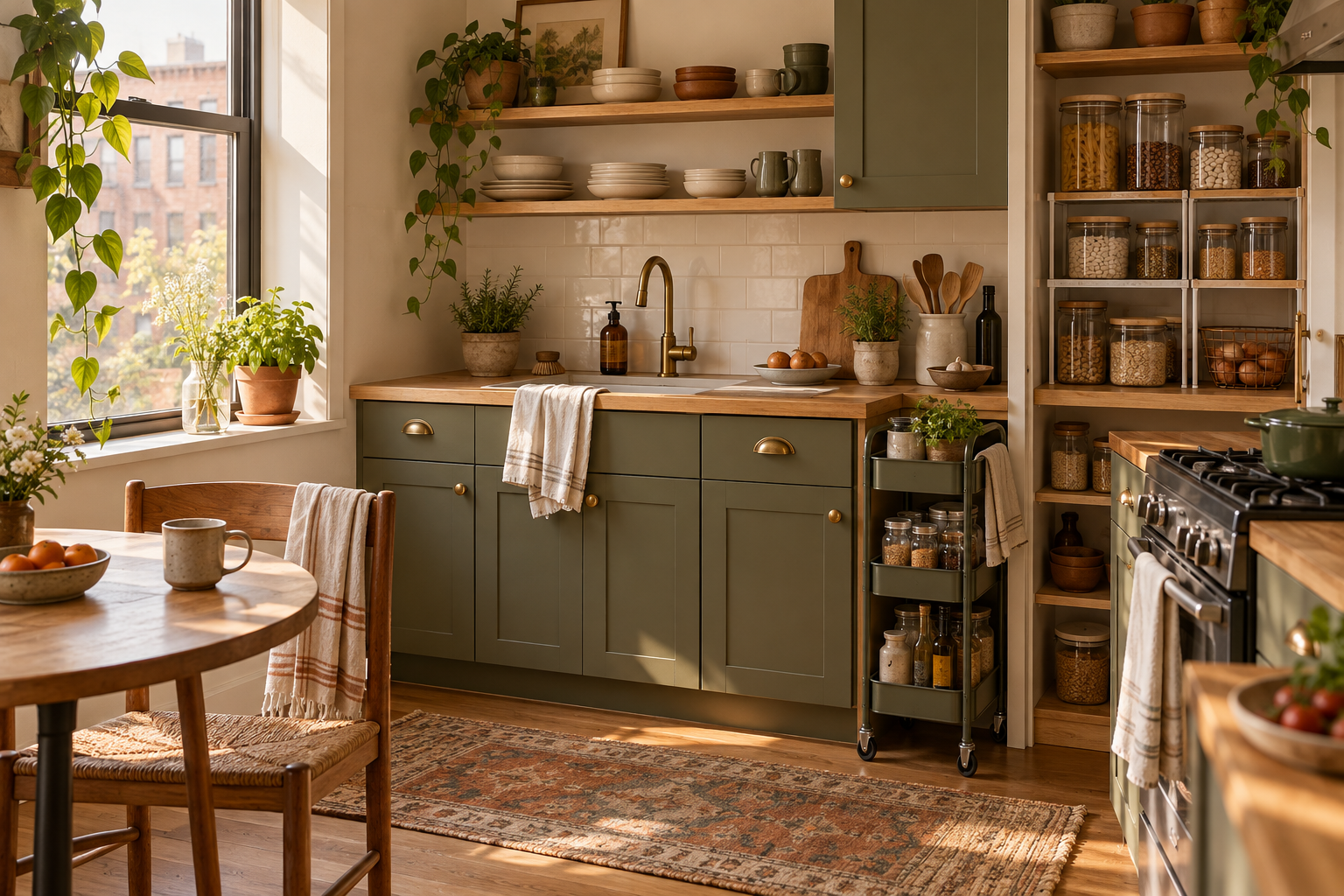
The three deep steel baskets make contents easy to see and contain. It is better suited to an open corner than a tiny refrigerator gap and can move between pantry storage, baking supplies and serving duty.
Trade-offs: Its useful baskets make it wider than ultra-slim plastic carts. Measure the wheelbase as well as the basket width.
Yamazaki Home Tower Rolling Cart
Yamazaki's Tower line includes narrow steel carts designed for compact household storage. The restrained profile suits a cart that remains visible instead of disappearing into a gap.
Trade-offs: The premium finish costs more, and narrow shelves limit bulky packages. Confirm the exact model because Tower carts come in several widths and configurations.
Compact Wood-Top Kitchen Cart
A small cart with a solid top can add both storage and a landing area for groceries or prep. Locking casters and a top that is easy to wipe clean are more important than squeezing in one extra shelf.
Trade-offs: This format needs clear working space on more than one side and should not narrow a walkway below a comfortable passage.
Measure the route, not only the parking spot
- Gap width at the narrowest point, including baseboards
- Cart width across wheels, handles and side rails
- Height below counters, switches and window ledges
- Clear space required to pull the cart fully forward
- Floor transitions the wheels must cross
- Loaded weight and whether casters lock
Our recommendation
Use an ultra-slim cart only for a measured gap and lightweight goods. For a cart that stays visible and moves around the room, a steel utility cart is the more flexible starting point. Choose a solid-top cart only when additional work surface is the real priority.
For more ways to use cabinet height, read our stackable kitchen organizer guide.